
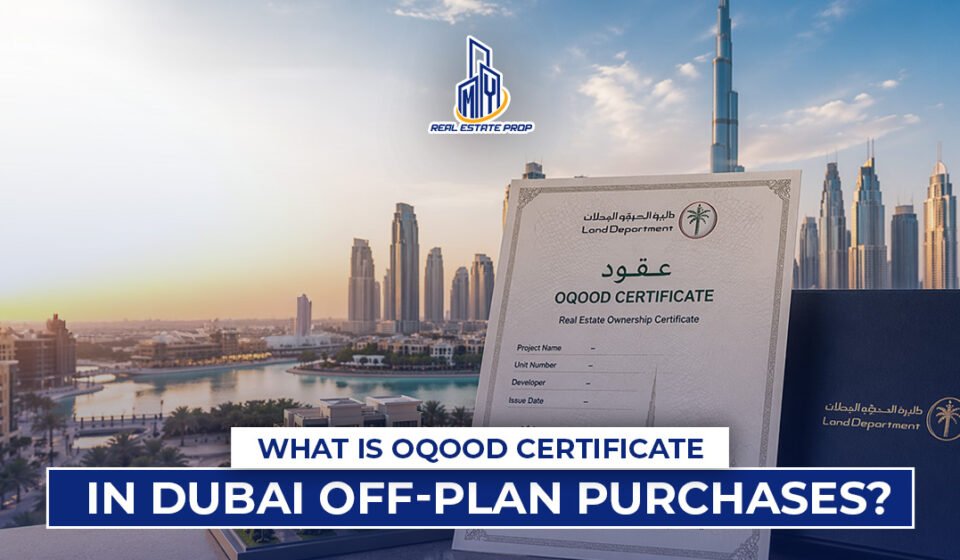
What Is Oqood Certificate in Dubai Off-Plan Purchases?
Dubai’s off-plan property market continues to attract local and overseas investors who want flexible payment plans and early entry pricing. Yet smart buyers know that documents matter as much as location and price. One of the most important records in any off-plan transaction is the Oqood certificate Dubai buyers receive during the construction stage.
Many people mistake Oqood for a title deed, but they serve different purposes. Oqood applies before project completion, while a title deed comes later. If you are considering an under-construction apartment, townhouse, or villa, understanding this system can protect your investment and help you track ownership correctly.
What Is an Oqood Certificate?
An Oqood certificate is an interim ownership registration linked to off-plan property purchases in Dubai. It records the buyer’s legal interest in a property that is still under development. Because the unit is not yet completed, a final title deed cannot usually be issued at that stage.
The Oqood certificate Dubai therefore acts as an official ownership record during construction. It is widely seen as a necessary step in regulated off-plan ownership Dubai transactions.
Why Is Oqood Important?
Off-plan transactions involve future delivery. Buyers commit funds months or even years before receiving the keys. That makes proper registration essential for confidence and market transparency. The Oqood certificate Dubai is important because it links the buyer to a specific unit within an approved project. It helps create a formal ownership trail and gives structure to the transaction from an official recordkeeping perspective.
It also becomes useful when discussing resale opportunities, inheritance planning, portfolio reporting, or future conversion to title deed status. Without this type of registration, buyers may face unnecessary uncertainty about their legal position. In a competitive market like Dubai, serious investors focus not only on location and price, but also on documentation quality.
When Is the Oqood Certificate Issued?
The timing of issuance can vary depending on the developer’s internal workflow, project progress, document readiness, and fee processing. In many cases, registration begins after the buyer signs the Sale and Purchase Agreement and meets initial payment obligations.
Once the Oqood registration process is completed through the relevant systems, the buyer receives confirmation of registration or access to the certificate details.
Some developers process registration promptly as part of a smooth onboarding experience. Others may take longer if documents are incomplete or approvals are still pending. Buyers should not assume that registration happens automatically on day one. A wise approach is to ask for a realistic registration timeline before signing the deal.
Who Handles Oqood Registration?
Dubai’s real estate market operates under a regulated framework designed to support transparency and investor confidence. Off-plan registrations are tied to official property systems managed through Dubai’s recognized authorities. That is why many professionals refer to Oqood as part of the DLD interim real estate registration process. It is not simply a private developer note. It forms part of the broader legal structure governing off-plan sales.
Although developers often coordinate the practical filing process, buyers should still monitor progress and request confirmation once completed. Responsibility should not be outsourced blindly. Always verify that the project itself is approved and that the seller has authority to market the unit.
What Details Are Usually Included?
An Oqood certificate Dubai record generally contains key transaction information needed to identify the unit and parties involved. This often includes the buyer’s name, project name, unit number, seller or developer details, and registration references. Depending on format and timing, it may also contain transaction-linked data such as contract value or other identifying information. Buyers should carefully compare the certificate with their signed Sale and Purchase Agreement. Even small errors in names, passport numbers, or unit references should be corrected early. Administrative mistakes are easier to fix during construction than after handover.
Oqood Registration Process
The Oqood registration process is a key legal step when buying an off-plan property in Dubai. It creates an official interim ownership record while the project is still under construction. Since a completed property title deed cannot usually be issued at this stage, Oqood helps confirm the buyer’s ownership interest until final handover.
Understanding each step allows buyers to track the transaction properly and avoid delays.
Step 1: Select the Property: The process begins when the buyer chooses a unit in an approved off-plan development. At this stage, buyers usually review the location, developer reputation, floor plan, payment plan, and expected completion date. Before proceeding, it is wise to confirm that the project qualifies for proper Oqood certificate Dubai registration.
Step 2: Reserve the Unit: Once the buyer decides to move forward, the unit is reserved through a booking or reservation form. A booking amount is often paid to secure the selected property. The reservation should clearly mention the unit number, property type, total price, and agreed payment structure. Buyers should verify all details carefully because these records often flow into later documents.
Step 3: Sign the Sale and Purchase Agreement: After reservation, the buyer signs the Sale and Purchase Agreement, commonly called the SPA. This is one of the most important documents in the deal. The SPA usually includes buyer and seller details, project information, unit specifications, total purchase price, installment schedule, and handover terms. Since the Oqood registration process relies on these details, accuracy is essential.
Step 4: Submit Required Documents: The buyer then provides identification and supporting documents. These may include passport copy, Emirates ID if applicable, address details, and company papers for corporate buyers. Incorrect or incomplete paperwork can slow registration. Buyers should ensure names and numbers match the SPA exactly.
Step 5: Pay Applicable Fees: At this stage, the buyer usually pays required installments and any applicable registration-related charges based on current rules and project terms. Keep receipts and payment confirmations safely. Strong records are useful throughout the DLD interim real estate registration journey.
Step 6: Developer Files the Registration: After documents and payments are completed, the developer generally submits the transaction through the approved registration system.This is the stage where the off-plan purchase moves from a private agreement into an official interim ownership record. Buyers should ask when the filing was submitted and request any available reference number.
Step 7: Oqood Record Is Created: Once approved, the buyer’s ownership interest in the under-construction unit is formally recorded. This is the core purpose of the Oqood certificate Dubai system. It gives the buyer recognized ownership status before project completion and before issuance of a final title deed.
Step 8: Certificate Issued: After successful processing, the Oqood certificate or official confirmation is issued. Buyers should review all details carefully, including buyer name, project name, and unit number.Any mistake should be corrected immediately.
Step 9: Continue Project Monitoring: After registration, buyers should continue making payments on time and tracking construction progress. Oqood confirms interim ownership, but the project is still under development.
Step 10: Final Title Deed After Completion:Once the project is completed and legal formalities are finished, ownership moves from the pre-title deed Dubai stage to final title deed issuance.The Oqood certificate remains an important part of the ownership journey from booking to full registration.
Is Oqood Mandatory?
For qualifying off-plan transactions, proper interim registration is generally considered a core compliance step. Buyers should treat it as essential rather than optional. If a broker, seller, or intermediary avoids discussing the Oqood certificate Dubai, that should immediately prompt further questions. Transparent transactions do not hide registration details. A genuine off-plan purchase should follow recognized procedures within Dubai’s property framework. Documentation should match the professionalism of the project being sold. When large sums of money are involved, buyers should never rely on trust alone.
Can an Oqood Property Be Sold Before Completion?
In many cases, off-plan units may be transferred before handover, but this depends on project rules, payment milestones, and prevailing regulations. Some developers require a certain percentage of the property price to be paid before approving a transfer. Others may charge administrative or transfer fees. Market conditions can also affect demand for resale units. Because ownership is still at the interim stage, the Oqood certificate Dubai becomes highly relevant during any transfer discussion. Buyers who plan to flip units for profit should understand exit conditions before purchase, not after.
Fees and Charges
Below is a concise overview of typical costs involved in the Oqood certificate Dubai registration stage. Exact figures may vary by project, developer, and current regulations, so buyers should always request a written breakdown.
| Fee Type | Description | Typical Basis |
| Property Registration Fee | Official fee for interim registration under Oqood | % of property value |
| Admin / Processing Fee | Developer or service charge for handling documentation and submission | Fixed or variable |
| Oqood Issuance Fee | Cost linked to generating the Oqood record | Fixed |
| Trustee / Service Fee | Charges for processing through authorized registration channels | Fixed |
| VAT (if applicable) | Applied on certain administrative or service-related charges | % of applicable fees |
Risks of Buying Without Oqood
Skipping proper registration can create unnecessary exposure and long-term complications. Ownership records may remain unclear, especially if disputes arise later. Future resale can become more difficult because buyers often want formal documentation. Financing discussions may also become harder if records are incomplete. If a project faces delays or contractual disagreements, missing registration can weaken the buyer’s practical position. For that reason, experienced investors do not overlook the Oqood certificate Dubai stage. Good paperwork is part of risk management.
How to Verify Oqood Status
Buyers should request the registration number, project details, and official proof that the filing has been completed or submitted. You should also verify that the unit number, buyer name, and project references match the purchase agreement exactly. Even minor inconsistencies should be corrected early. If anything appears unclear, pause additional payments until written clarification is received. Verification may feel administrative, but it can save major stress later.
Oqood for Foreign Investors
Dubai’s freehold market attracts investors from Europe, Asia, Africa, and beyond. Many international buyers enter through off-plan opportunities because they want lower entry pricing or future capital appreciation potential. For overseas investors, the Oqood certificate Dubai is particularly valuable because it creates formal evidence of ownership interest before handover. This can support personal financial records, portfolio statements, succession planning, or discussions with advisors in the investor’s home country. Cross-border investors should be especially disciplined about document storage and transaction records.
What Happens After Completion?
Once construction is completed and all required approvals are granted, ownership records move toward final title deed issuance. At that point, the pre-title deed Dubai stage transitions into completed ownership registration.
The buyer’s position moves from an under-construction unit to a finished legally registered property. The timing can depend on handover readiness, utility clearances, project completion procedures, and authority processing schedules. Buyers should ask developers what steps remain between handover notice and title deed issuance.
Final Thoughts
The Oqood certificate Dubai is one of the most important protections in Dubai’s off-plan property market. It records ownership during construction, supports transparency, and creates a clear route toward final title deed registration. If you are buying off-plan in Dubai, do not focus only on brochure images, launch prices, or payment plans. Review the developer, check the project approvals, and ensure registration is properly handled. Strong investments are built on strong documentation. In Dubai’s off-plan market, understanding Oqood is part of investing wisely.
FAQ’s
What is the Oqood certificate Dubai used for?
It records interim ownership for off-plan property purchases in Dubai before project completion and before the final title deed is issued.
Is Oqood the same as Dubai title deed?
No, Oqood is a temporary off-plan registration. Title deed is issued after construction completion and final ownership transfer formalities finish.
Who issues an Oqood certificate in Dubai?
The registration is processed through Dubai’s official property system, usually coordinated by the developer during the off-plan purchase process.
Can foreigners get an Oqood certificate in Dubai?
Yes, eligible foreign buyers purchasing approved off-plan properties in designated areas can receive Oqood registration during the transaction process.
When does Oqood become a title deed?
After project completion, handover, and final approvals, ownership moves from Oqood registration stage to official title deed issuance.